
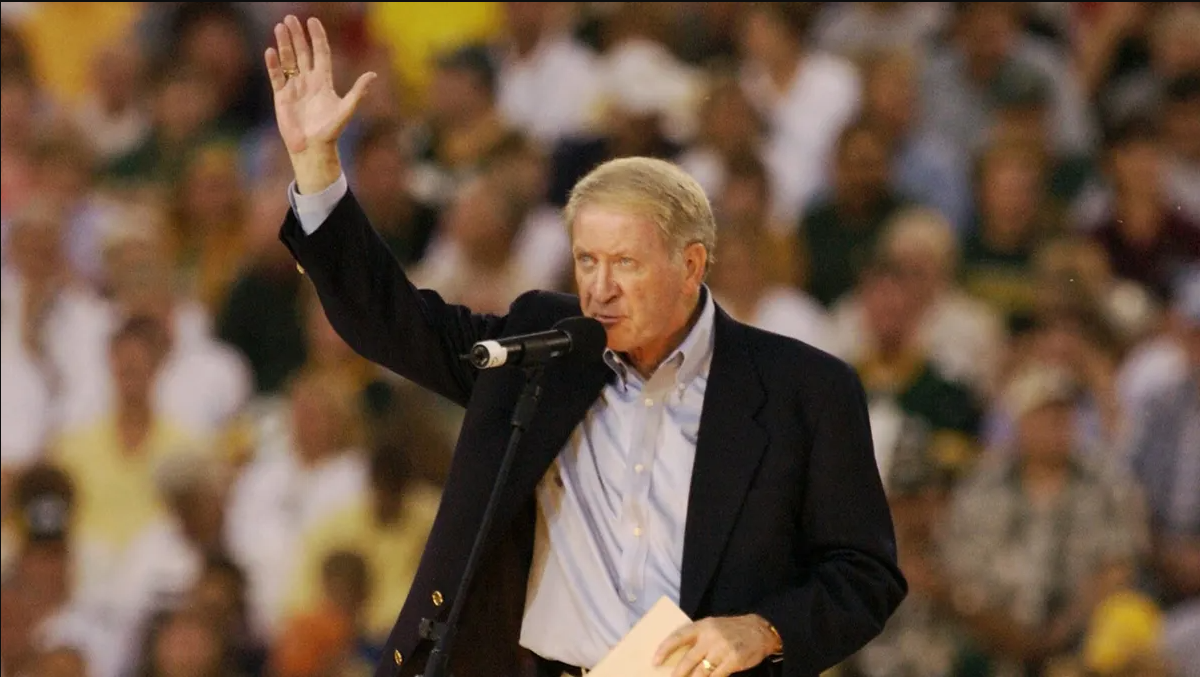
At the time Harlan took over, the Packers had endured more than two decades of mediocrity. From 1968 to 1988, the team produced only four winning seasons and made just two playoff appearances, with mounting concerns about its long‑term viability in the NFL’s smallest market.
Harlan wasted no time implementing sweeping changes. During the 1989 season, he made a bold move by firing Tom Braatz, the executive VP of football operations, and soon afterward hired Ron Wolf, granting him full authority over football decisions. This became one of the most pivotal decisions in franchise history.
Wolf would go on to trade for an unproven young quarterback named Brett Favre and recruit future Hall of Famer Reggie White, the biggest free‑agent signing of the 1990s, moves that reshaped the team’s competitive identity. These decisions culminated in the Packers capturing the Super Bowl XXXI championship in 1997, the franchise’s first since Lombardi’s era.
Harlan’s legacy extends beyond roster moves. He masterfully blended tradition with modernization, elevating the Packers into one of the NFL’s most financially sound and structurally innovative organizations.
Harlan spearheaded the $295 million renovation of Lambeau Field, transforming it into a year‑round destination and securing the franchise’s economic future. He championed a Brown County sales tax referendum that funded much of the project, convincing local voters that a modernized stadium was essential to remain competitive.
Under his watch, the Packers held their first stock sale in nearly 50 years (1997), raising more than $24 million and reinforcing the team’s unique community‑owned identity.
One of his most symbolic moves was ending the decades‑long practice of splitting home games between Green Bay and Milwaukee. Beginning in 1995, all Packers home games permanently returned to Lambeau Field, enhancing local pride and strengthening the team’s connection to its small‑town roots.
Bob Harlan was more than an executive, he was a steward of tradition and an architect of the modern Green Bay Packers. His visionary decisions, steady leadership, and unwavering belief in the power of community reshaped not just the franchise, but the expectations of what a small‑market team can achieve in the NFL.
His legacy is etched into Lambeau Field, into the trophy case, and into the hearts of millions who support the green and gold.
RIP